7 February 2020
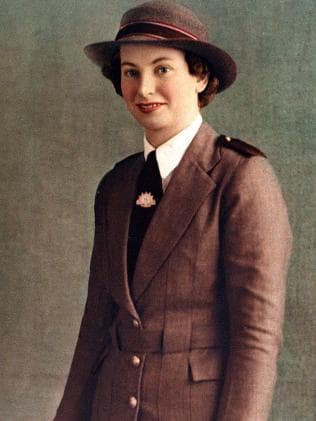 World War II nurse and prisoner of war Vivian Bullwinkel in 1941
On 16 February we will pay tribute to the 22 Australian Army Nurses who were machine gunned by soldiers of the Imperial Japanese Army on Bangka Island’s Radji Beach, and to all Australian women who served their country in the armed forces.
The women who served with the armed forces in the two World Wars were endowed with the finest qualities, and this quality is evident with the nurses who served in Malaya.
The story of their evacuation from Singapore, of the Bangka Island Massacre, and of the subsequent tribulations of the survivors in a prisoner of war camp, is now an epic story that is sure to fill all Australians with pride.
The decision to evacuate all the women and children from Singapore was hastily made when it became clear Singapore would be invaded by the Japanese.
Sixty-five Australian nurses embarked on a small coastal steamer Vyner Brooke. The remainder of the passengers were mainly mothers and small children.
On 14 February 1942, as the Vyner was passing between Sumatra and Borneo, Japanese aircraft bombed the overloaded vessel and it sank quickly. Preventing complete chaos, the nurses attended to the passengers, seeing that they got life jackets on, and ushering them into lifeboats.
Twelve Australian nurses were killed in the attack. Of the remaining fifty-three nurses, twenty-two reached Bangka Island, whilst the remainder were lost at sea.
A group of sixty survivors, including the twenty-two Australian nurses, landed in lifeboats on the northern coast of Bangka Island. They voted to surrender to the Japanese rather than slowly starve to death, but the Japanese patrol that found them did not accept their surrender.
The nurses were ordered by the Japanese to form a line and walk into the sea. The women knew what was going to happen to them, but none panicked or pleaded for mercy. When the water reached waist height, they were machine gunned down from behind. Miraculously, there was one survivor, South Australian nurse Vivian Bullwinkel, who upon discovering that she was only wounded, pretended to be dead.
With incredible level headedness and endurance, she evaded the prowling Japanese. Ten days after the massacre, Vivian felt strong enough to leave her hiding place and decided to walk to Muntok and surrender.
 Vivian Bullwinkel after the Bangka Island Masscare
Realising the lives of all the survivors of the Vyner Brooke would be at risk if the Japanese discovered what she had seen, she concealed her wound and treated herself. A slung water bottle concealed the bullet hole in her frock. For three and half years of imprisonment, an organised and enforced silence among the party prevented the Japanese from learning that she was the sole survivor of the shocking massacre.
 Vivian Bullwinkel testifying before the War Crimes Tribunal in Tokyo in 1947
In 1947, the same year she retired from the army, Vivian gave evidence of the massacre at the war crimes trial in Tokyo.
She devoted herself to the nursing profession and to honouring those killed on Bangka Island, raising funds for a nurses’ memorial and serving on numerous committees, including as a member of the Council of the Australian War Memorial.
 The uniform worn by Vivian Bullwinkel, when she was shot by Japanese soldiers
Vivian Bullwinkel, the recipient of the Florence Nightingale Medal, an MBE and the Australia Medal, returned to Bangka Island in 1992 to unveil a shrine to those who never returned.
She died in Perth of a heart attack on July 3, 2000, aged 84.
On Sunday 16 February 2020, we will be thinking of Vivian and the many Australian nurses who have served in the armed forces.
All are welcome to the attend the Bangka Strait memorial service, which will include a service, the Australian Army band, and a catafalque party.
10am, Sunday 16 February
Women’s Memorial Playing Fields
Shepherds Hill Road, St Mary’s